
Does Homeowners Insurance Cover Termite Damage? What California Homeowners Need to Know

General Information, Not Legal or Insurance Advice
This article covers the typical industry pattern for homeowners insurance and termite damage. It’s general information, not legal or insurance advice. Your specific policy language controls what’s covered in your situation — read your policy carefully and consult your insurance company or a licensed insurance professional for coverage questions specific to you. |
You found termite damage. Maybe minor — a soft baseboard, a gallery-marked stud that’s already been eaten. Maybe major — extensive damage in framing, a bill you’re trying to figure out how to absorb. And a very reasonable thought forms: wait, isn’t this what homeowners insurance is for? I pay them thousands of dollars a year. Surely this counts. Then you call your insurance company, or you check the policy language, or you talk to someone who’s been through the exact same thing. And you find out.
So does homeowners insurance cover termite damage? Almost never. The near-universal industry pattern is that standard homeowners policies exclude termite damage — and the reason isn’t random, it’s a specific insurance-industry framework worth understanding. Insurers cover sudden and accidental losses (a tree falling on your roof, a burst pipe, a fire). They generally exclude preventable maintenance issues — problems considered the homeowner’s responsibility to prevent, detect early, and address. Termite damage falls squarely into the second category, and finding this out after damage occurs is one of the most unpleasant homeowner surprises there is.
Let’s cover why termite damage is excluded, the rare exceptions where partial coverage might apply, what actually does protect you financially (spoiler: not insurance), and what to do if you’re currently mid-claim or mid-denial.
Quick Answer: What Insurance Does and Doesn’t Cover
Does homeowners insurance cover termite damage? Almost never — standard policies exclude it as preventable maintenance.
Are there any exceptions? Very narrow ones — like sudden collateral damage (a termite-weakened beam suddenly collapses) may sometimes trigger coverage.
Why won’t they cover it? Insurers class termite damage as slow, preventable, and the homeowner’s responsibility to detect.
What actually protects me financially? A termite bond (protection from a licensed pest company) and early inspection — not insurance.
First move if I already have damage? Get an inspection to document scope. Call Termike at (888) 683-3592. |
Why You Can Trust Termike Pest Control
License: California Structural Pest Control Board — License PR8832 (Branch 2 & 3 certified)
Membership: National Pest Management Association (NPMA)
Experience: 20+ years serving Orange County, LA County, Riverside & San Bernardino County
Prevention-First Framing: Because insurance won’t cover termite damage, catching activity early is genuinely the financial protection homeowners have
Honest About Limits: Termike doesn’t sell insurance and can’t promise what your specific policy will or won’t cover — we can only tell you what the industry pattern is |
Why Insurance Excludes It (The ‘Preventable Maintenance’ Framework)
Understanding the specific reasoning insurers use isn’t just academic — it’s what makes the ‘why not?’ shock make sense, and it tells you where the very narrow exceptions live. So when people ask does homeowners insurance cover termite damage, the useful answer starts with the framework insurers actually apply.
Standard homeowners policies are built to cover sudden and accidental losses — things that happen unexpectedly, quickly, and without the homeowner having a real chance to prevent them. A tree falls on your roof in a storm. A pipe bursts. A fire starts. These fit the model. Insurers pool risk against unpredictable events and pay claims when the unpredictable happens.
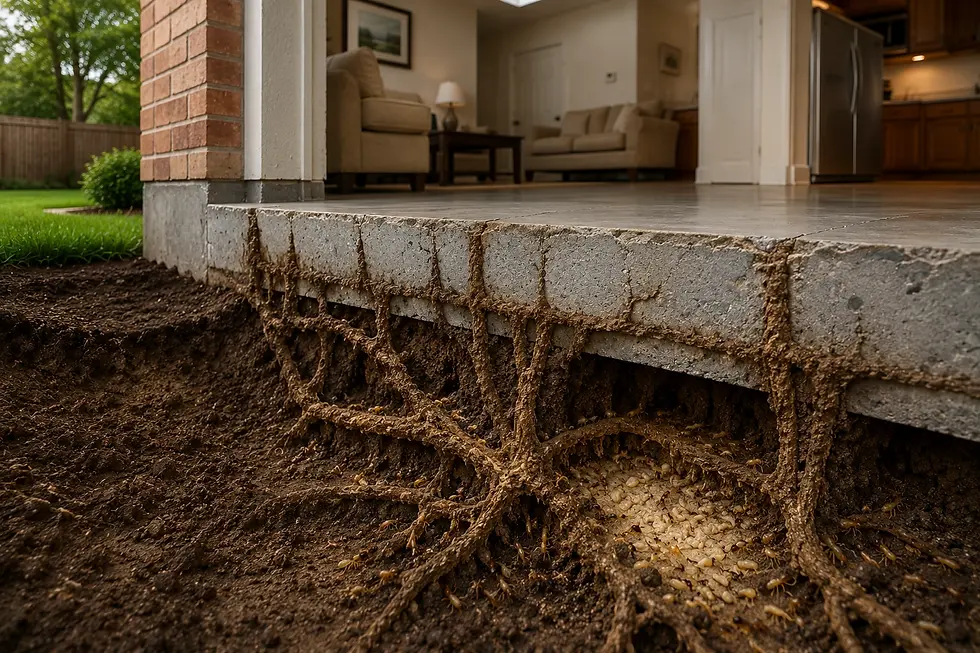
Termite damage doesn’t fit that model. It’s slow (months to years to accumulate), the signs are typically detectable long before serious damage occurs, and the insurance industry treats it as preventable through routine inspection and maintenance — which the homeowner is considered responsible for. From the insurance company’s perspective, a homeowner who lets a termite infestation reach the point of structural damage has (in their framework) failed to maintain the property. So the exclusion isn’t arbitrary; it’s baked into what these policies are actually designed to do.
The California Department of Insurance homeowners guidance is consistent on this framework — most standard policies exclude damage from insects, rodents, and vermin, along with other slow-developing issues like mold and gradual water damage.
The Narrow Exceptions
There are a few narrow scenarios where a partial claim might succeed, though even these are inconsistent and depend heavily on your specific policy language. So when people ask does homeowners insurance cover termite damage in these edge cases, the honest answer is ‘maybe, but don’t count on it.’
Sudden Collapse from Termite-Weakened Structure
If a termite-weakened structural element (a beam, a floor section) suddenly collapses, some policies’ collapse provisions may cover the resulting sudden damage — even though the underlying termite damage that caused the weakness wouldn’t be covered. This is genuinely fact-specific and depends on your policy’s exact collapse language.
Water Damage from a Termite-Compromised Fixture
If termites damage wood around plumbing to the point that a pipe or fixture fails suddenly and causes water damage, the water damage itself might be covered even if the termite damage isn’t. Again, policy-specific.
Very Rare Endorsements
A very small number of insurers offer termite endorsements as add-ons, though these are uncommon and typically expensive relative to what a termite bond costs.
Two things worth being direct about with these exceptions: (1) they don’t cover the underlying termite damage — only the sudden secondary consequence, and (2) claims in this category are frequently denied or reduced, so don’t treat these as reliable coverage. If you’re relying on them as your termite financial plan, you’re relying on something that usually won’t come through.
What Actually Protects You (Not Insurance)
If insurance almost never pays for termite damage, and homeowners are financially exposed to the full cost of both treatment and repair, what does protect you? Three things, and none of them are homeowners insurance.
A Termite Bond (Warranty from a Pest Company)
This is the financial-protection product that actually exists for termite risk. A termite bond is a warranty/contract from a licensed pest company that typically covers re-treatment (and sometimes damage repair — the terms vary widely) if termites are found in a treated area within the warranty period. It’s the equivalent of insurance for termite risk, and it’s what the insurance industry effectively expects you to have instead. Termike’s guide on termite bond vs home warranty walks through what bonds actually cover.
Home Warranties (Different from Insurance, and Different from Bonds)
Some home warranty products cover certain pest situations, but termite coverage in a home warranty is separate and typically limited. See does a home warranty cover termites for the specifics — home warranties are a different product from insurance and from bonds, and often don’t cover termite damage the way people assume.
Early Detection (The Cheapest Protection of All)
Because damage severity compounds over time, catching activity early is genuinely the most cost-effective protection homeowners have. A $0 free inspection that catches a small colony saves the several-thousand-dollar treatment-plus-repair bill of a large one. The cost of termite damage vs treatment piece covers the math.
If You’re Currently Mid-Denial or Considering a Claim
If you’ve already filed and been denied, or if you’re considering filing — here’s practical general guidance for the situation. Because does homeowners insurance cover termite damage almost always resolves to ‘no,’ the productive path usually isn’t fighting the denial; it’s addressing the actual damage.
1. Read the actual denial language carefully. Insurers cite specific policy sections. Knowing exactly which exclusion they invoked tells you whether an appeal has any basis or not
2. Look for genuine sudden-and-accidental angles. If any part of the damage was truly sudden (collapse, water event caused by termite-compromised fixture), that specific portion may warrant reconsideration — with policy-specific documentation
3. Get a documented professional inspection. This creates a baseline record of scope and treatment needs — useful for any appeal AND essential for planning the repair
4. If the denial is standard exclusion-based, focus on the actual solution. Time and energy spent fighting an exclusion that’s in every policy is usually better spent addressing the termite problem and documenting for future prevention
5. For any coverage question, consult your insurance company directly or a licensed insurance professional who can read your specific policy language
The Financial Reality
Since does homeowners insurance cover termite damage nearly always resolves to ‘no,’ the practical financial reality for California homeowners is: you’re responsible for both the treatment cost and the repair cost of any termite damage on your property, and your primary financial protection isn’t an insurance product — it’s a combination of (a) periodic professional inspection to catch activity early, (b) a termite bond if you’re in a higher-risk situation, and (c) actively correcting the conducive conditions (moisture, wood-to-soil contact, unmonitored structural changes) that give colonies an opening in the first place.
The homeowners who avoid the biggest termite repair bills aren’t the ones with the best insurance — they’re the ones who caught activity while it was small.
The Bottom Line
The near-universal answer to does homeowners insurance cover termite damage is no — standard policies exclude termite damage as preventable maintenance, and while a few narrow exceptions exist for sudden collateral damage, those aren’t reliable coverage. What actually protects you is a termite bond (the industry’s designed product for this risk), possibly a home warranty with pest coverage, and — cheapest of all — routine professional inspection that catches activity early, when it’s a few-hundred-dollar treatment rather than a several-thousand-dollar treatment-plus-repair project. Insurance isn’t the safety net for this one. Prevention and early detection are.
Frequently Asked Questions About Does Homeowners Insurance Cover Termite Damage
Q: Does homeowners insurance ever cover termite damage?
A: In the vast majority of cases, no. Standard homeowners policies almost universally exclude termite damage as "preventable maintenance," because the insurance industry classifies slow, detectable damage as the homeowner's responsibility to prevent through routine inspection. There are very narrow exceptions — like collapse coverage that may apply if a termite-weakened structural element suddenly fails, or water damage from a fixture compromised by termite-damaged wood — but these are policy-specific, inconsistent, and frequently denied. Don't rely on insurance as your termite financial plan; treat coverage as unlikely and confirm with your specific insurer if you have questions.
Q: Why don't insurance companies cover termite damage?
A: Because standard homeowners policies are built to cover "sudden and accidental" losses — unexpected events the homeowner couldn't reasonably prevent, like storms, fires, or burst pipes. Termite damage doesn't fit that model. It develops slowly over months or years, the warning signs are typically detectable long before serious damage occurs, and the insurance industry treats it as preventable through routine inspection and maintenance — which they consider the homeowner's responsibility. From their framework, damage that reached structural severity represents a maintenance failure rather than an insurable event. That's why the exclusion is standard across essentially every major carrier.
Q: If insurance won't pay, what does actually protect me from termite damage cost?
A: Three things, and none of them are homeowners insurance. First, a termite bond — a warranty from a licensed pest company that typically covers re-treatment (and sometimes damage repair, terms vary) if termites are found in a treated area within the warranty period. This is the financial-protection product designed for termite risk. Second, some home warranties include limited pest coverage, though this varies widely. Third — and cheapest of all — routine professional inspection that catches activity early. Because damage severity compounds with time, an early catch is orders of magnitude cheaper than a delayed one.
Q: My claim was denied — should I appeal?
A: Depends on why it was denied. If the denial cited the standard "preventable maintenance" or vermin-exclusion language that appears in essentially every policy, appealing rarely succeeds and time is usually better spent addressing the actual damage. If the denial ignored a genuine sudden-and-accidental element — like a termite-weakened beam that actually collapsed, or a plumbing failure caused by termite-damaged wood — that specific portion may warrant reconsideration with policy-specific documentation. Read the denial language carefully, and for any coverage question, consult your insurance company directly or a licensed insurance professional who can read your specific policy. Termike can help document scope for either path — call (888) 683-3592.
Because Insurance Won’t Pay, Early Detection Is the Protection — Free Inspection If homeowners insurance almost never covers termite damage, then catching activity early — before it becomes a structural repair bill — is the actual financial protection you have. Termike’s free FLIR inspection catches early activity while it’s cheap to address. Call: (888) 683-3592 Or book online → Schedule Your Free Inspection |


Comments