
Is My Termite Damage Old or Active? How to Tell the Difference
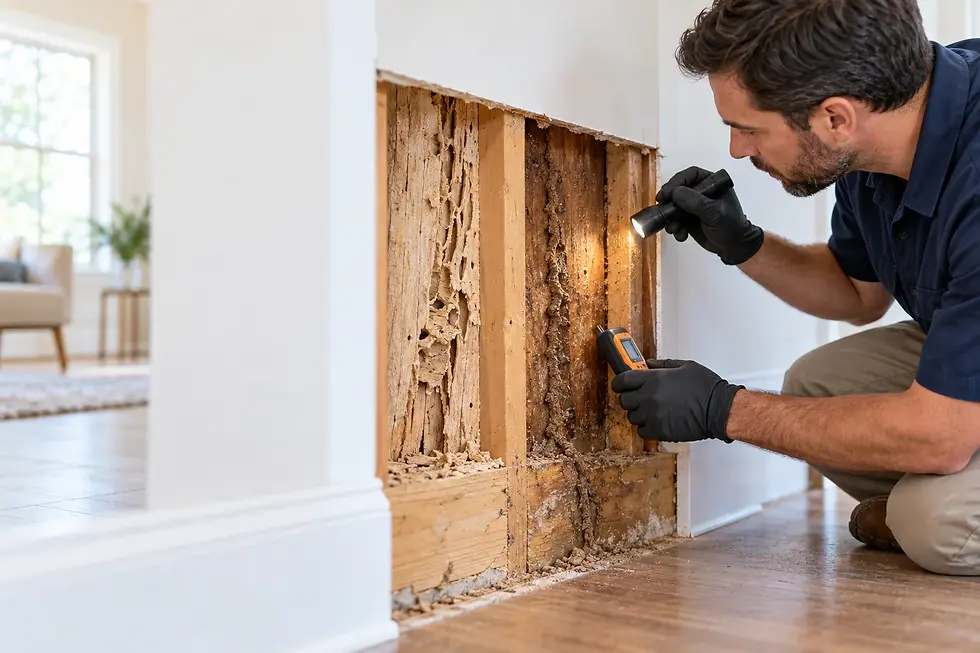
You moved the bookshelf, or pulled up a baseboard, or crawled under the house to check something unrelated — and there it was. Hollowed-out wood, a crumbly gallery, maybe a dried-up mud tube snaking up the foundation. Your stomach dropped. And then the second thought hit, the one that actually matters for your wallet and your weekend: is this happening right now, or did this happen years ago and it’s already over? Because those are two completely different problems — one needs treatment this month, the other might need nothing at all.
Here’s the honest reality about the is termite damage old or active question, and it’s the single most useful thing to understand before you spend a dollar. Termite damage doesn’t repair itself — hollowed wood stays hollowed long after the termites are gone. So finding damage tells you termites were there at some point. It does NOT automatically tell you they’re there NOW. And the difference matters enormously, because old, dormant damage from a long-dead colony is one of the most common reasons homeowners get talked into treatment they don’t actually need.
The good news is there are real, observable tells for whether is termite damage old or active — things you can look for yourself before anyone tries to sell you anything. Let’s walk through the mud-tube test, the frass test, the gallery pattern, the moisture clue, and the live-insect check — and then the honest limits of self-diagnosis and when you genuinely need a professional to confirm.
Quick Answer
Is my termite damage old or active? Damage alone doesn’t tell you. You need to check for ACTIVE signs — live insects, fresh frass, damp/dark mud tubes, and rebuilding behavior.
Mud tube test? Break a small section. If it’s rebuilt in a few days, it’s active. If it stays broken and dry, likely old.
What does old damage look like? Dry, dusty galleries, brittle old tubes, no live insects, and surface-patchy rather than uniform tunneling.
Does old damage need treatment? Not for termites that are already gone — but the weakened wood may still need repair, and conducive conditions still need fixing.
Best way to be sure? A FLIR thermal + moisture inspection confirms active vs inactive. Call Termike at (888) 683-3592. |
Why You Can Trust Termike Pest Control
License: California Structural Pest Control Board — License PR8832 (Branch 2 & 3 certified)
Membership: National Pest Management Association (NPMA)
Experience: 25+ years serving Orange County, LA County, Riverside & San Bernardino County
Honest Old-vs-Active Calls: We document whether damage is old or active with FLIR thermal, moisture metering, and probing — and we won’t recommend treatment for inactive damage that doesn’t need it
No Fear-Mongering: If what you’re looking at is old, dormant damage, we tell you plainly. The inspection finding drives the recommendation, not the other way around |
Why Telling If Termite Damage Is Old or Active Is So Confusing
The core reason this question trips up almost every homeowner is simple physics: wood doesn’t heal. When termites eat through a joist or a stud, that damage is permanent until someone physically repairs it. A colony could have died, been treated, or moved on five years ago, and the hollowed wood it left behind looks exactly as alarming today as it did the day the termites left.
This creates a genuine diagnostic gap. The damage is a historical record — it proves termites were present at some point. But it’s a terrible indicator of whether they’re present right now. That’s why answering is termite damage old or active requires looking for signs of CURRENT activity layered on top of the damage, not just evaluating the damage itself. And it’s exactly this confusion that lets less-scrupulous operators present old, dead damage as an active emergency.
According to the University of California Integrated Pest Management Program, confirming an active infestation requires careful inspection for live termites and current activity — not just the presence of damage. The damage is the starting point of the investigation, not the conclusion.
The Five Tells That Reveal If Termite Damage Is Old or Active
Here are the observable signs that answer whether is termite damage old or active for the spot in front of you — separating a live problem from a dead one. No single tell is definitive on its own, but together they paint a reliable picture.
The Mud Tube Test — Break It and Watch
For subterranean termites, mud tubes are the highway between the soil colony and your wood. The classic active-vs-old test is to break a small section (an inch or so) off a tube and check back in a few days. If the termites are active, they’ll rebuild the broken section to restore their protected passage — usually within a day or two. If it stays broken, the tube is likely abandoned. Also note the tube’s condition: damp, dark, intact tubes suggest active use, while dry, crumbly, grayish tubes that flake apart usually mean old activity. Termike’s guide on mud tubes on your foundation covers what tubes look like in more detail.
The Frass Test — Fresh Versus Stale
Drywood termites push their droppings (frass) out of the wood through tiny kick-out holes, leaving little piles that look like coarse coffee grounds or sawdust. Fresh frass is a strong sign of active infestation — especially if you clean it up and it reappears within days or weeks. If you find frass, sweep it away completely and mark the date. New accumulation means live activity. No new accumulation over a few weeks suggests the pile is old and the colony may be gone.
The Gallery Pattern — Damage Shape Clues
The pattern of the damage itself offers hints. New, active damage tends to tunnel under or just beneath the wood surface in a more uniform, following-the-grain pattern, and the galleries often feel slightly damp in subterranean cases. Old damage tends to be more surface-exposed, patchy, dried out, and dusty — the thin outer layer has often already broken away, exposing the brittle gallery network underneath. Dry, papery, dusty galleries with no moisture almost always mean old activity.
The Moisture Clue
Subterranean termites need moisture to survive and carry it with them, so active subterranean galleries and tubes often feel damp and look darker. Dry, dusty, pale galleries point toward old or inactive damage. For Drywood termites this matters less (they tolerate dry wood), but any associated moisture problem is still worth noting because it signals conditions that attract new activity. Termike’s piece on termite damage versus water damage helps separate the two when moisture is in the picture.
The Live Insect Check
The most definitive tell is finding living termites. Workers (pale, soft-bodied, cream-colored) in the galleries mean active infestation, full stop. Swarmers (winged reproductives) indoors mean a mature colony is present somewhere. Dead termites and discarded wings alone are more ambiguous — they could be from a current colony or a long-past swarm event. If you break open a gallery and find only empty tunnels with no live insects and no fresh frass, that’s a point toward old damage.
What Old Termite Damage Actually Means for You
Once you’ve worked through whether is termite damage old or active and your investigation points toward old, inactive damage, the implications are very different from an active infestation — and much better for your wallet.
• No termite treatment needed for a dead colony. You don’t treat termites that aren’t there. A legitimate inspector confirms inactivity rather than treating reflexively
• The weakened wood may still need repair. Old damage doesn’t get stronger. If it’s structural, see Termike’s guide on how much termite damage is too much to judge whether repair is warranted
• Conducive conditions still matter. What attracted the old colony can attract a new one. Moisture, wood-to-soil contact, and drainage issues should still get addressed
• Document it for disclosure. If you’re selling, old damage typically still gets noted on a WDO report. Termike’s guide on Section 1 versus Section 2 termite report items explains how inactive findings get categorized
• Watch for recurrence. Old damage in a termite-prone property is a reason for regular monitoring, not panic
This is exactly where old damage becomes a trap. Because old damage looks identical to recent damage, it’s one of the most common reasons homeowners get sold unnecessary treatment. An operator who codes dried-out, dead-colony galleries as an active emergency is either careless or dishonest. The U.S. Environmental Protection Agency treatment framework is clear that treatment should match confirmed active infestation — not the mere presence of historical damage.
The Honest Limits of Self-Diagnosis
These tests are genuinely useful for forming an initial read on whether is termite damage old or active — but they have real limits, and pretending otherwise would be doing you a disservice.
• Hidden activity. You can only test the tubes and galleries you can see. An active colony can be feeding in concealed framing while the visible tube you tested sits abandoned
• Multiple colonies. One area can be old and dead while another area of the same house has a live infestation. A single old-looking tube doesn’t clear the whole structure
• Species differences. Subterranean and Drywood tells differ, and misidentifying the species can send your diagnosis the wrong way
• The rebuild window. The break-the-tube test needs days to show a result, and weather or disturbance can confound it
This is why professional confirmation matters for any damage that could be structural or that affects a transaction. A proper inspection uses FLIR thermal imaging (active colonies produce heat and moisture signatures), moisture meters, and systematic probing to distinguish active from inactive across the whole structure — not just the spots you happened to find. Termike’s piece on how thermal imaging detects termites covers the detection side.
The Bottom Line
The is termite damage old or active question has a real, checkable answer — but the damage alone won’t give it to you, because wood doesn’t heal and old damage looks just as alarming as fresh damage. To tell active from old, you have to look for signs of CURRENT activity: break a mud tube and see if it rebuilds, clear away frass and see if it returns, check whether galleries are damp and dark (active) or dry and dusty (old), and look for live workers or indoor swarmers. If everything points to old, dead damage, you don’t need termite treatment — though the weakened wood may still need repair and the conditions that attracted the colony still need fixing. If anything points to active, treat it promptly before it gets worse. And because old damage is one of the most common reasons homeowners get sold treatment they don’t need, get a proper FLIR-and-moisture inspection to confirm before you commit to anything — a legitimate inspector will tell you plainly when what you’re looking at is already over.
Frequently Asked Questions
How can I tell if my termite damage is old or active without a professional?
There are several self-checks that form a reliable initial read, though none is definitive alone. The mud tube test is the best for subterranean termites: break off a small section of a mud tube and check back in a few days — active termites rebuild the broken passage within a day or two, while abandoned tubes stay broken. The frass test works for Drywood termites: sweep away the coffee-ground-looking droppings completely, mark the date, and see if new frass reappears (new accumulation means active). Also check whether galleries and tubes are damp and dark (active, especially subterranean) or dry, dusty, and crumbly (old). And look for live cream-colored workers or indoor swarmers — finding living termites confirms active infestation. Together these give a strong initial picture, but hidden or multiple colonies mean professional confirmation matters for anything structural or transaction-related.
Does old termite damage still need to be treated?
Not for termites that are already gone — you don't treat a colony that isn't there, and a legitimate inspector confirms inactivity rather than treating reflexively. But old damage has two lingering implications. First, the weakened wood doesn't get stronger on its own; if the damage is structural, it may still need repair regardless of whether termites are active. Second, whatever conditions attracted the original colony (moisture, wood-to-soil contact, poor drainage) can attract a new one, so those conducive conditions still need addressing. Old damage in a termite-prone property is a reason for ongoing monitoring and condition-correction, not for immediate treatment of a dead colony. If someone is pushing full treatment based purely on old, dried-out damage with no signs of current activity, that's a reason to get a second opinion.
Why do some companies treat old termite damage as an active emergency?
Because old damage looks identical to recent damage to an untrained eye, and that ambiguity can be exploited. Hollowed wood, crumbly galleries, and old mud tubes are alarming to look at whether the colony died last month or a decade ago — and some operators either fail to check for current activity or deliberately present dead-colony damage as an active crisis to sell treatment. This is one of the most common termite-related complaints homeowners report. A legitimate inspection distinguishes active from inactive using FLIR thermal imaging, moisture metering, and systematic probing, and the inspector tells you plainly when damage is old and doesn't warrant treatment. The honest standard is that treatment matches confirmed active infestation, not the mere presence of historical damage. When in doubt, an independent second opinion costs little and protects against unnecessary treatment.
I found dead termites and wings but no live ones — is that old or active?
That's one of the more ambiguous findings, and it needs follow-up rather than a conclusion. Discarded wings and dead termites can come from a current colony (swarmers that emerged, paired off, and died) OR from a long-past swarm event with no ongoing infestation. The presence of wings tells you a reproductive swarm happened at some point, which means a mature colony was nearby — but it doesn't tell you whether that colony is still active. The next step is to look for the corroborating active signs: fresh frass that reappears after cleanup, mud tubes that rebuild after being broken, damp galleries, and live cream-colored workers. If those active signs are absent across a careful check, the wings may be from an old event. But because indoor swarmers specifically can indicate an interior colony, this is a finding worth confirming with a professional inspection. Termike offers free inspections — call (888) 683-3592.
Not Sure If It’s Old or Active? Free FLIR Inspection
The only way to know for certain whether termite damage is old or active is a proper inspection. Termike’s free FLIR thermal inspection confirms active vs inactive with moisture mapping and probing — so you don’t pay for treatment you don’t need, or skip treatment you do. Call: (888) 683-3592 Or book online → Schedule Your Free Inspection |


Comments