
Is It Safe to Live in a House With Termites? What You Need to Know Right Now
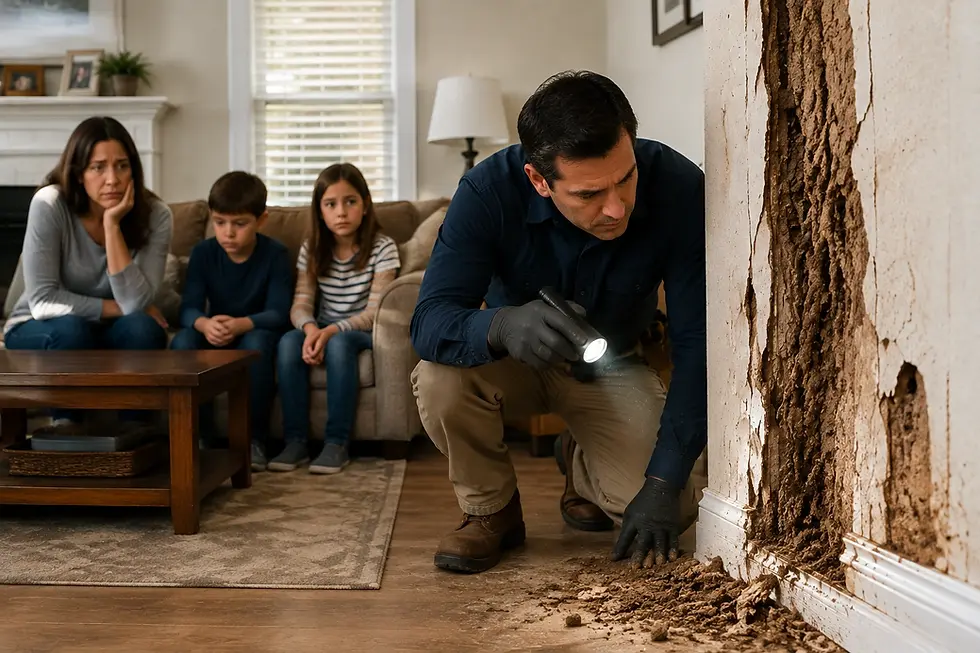
The inspection confirmed it: you have termites, and they're active. Once the initial news settles, a very immediate and very human question takes over — is it safe for us to keep sleeping here tonight, or do we need to get out? Especially with kids or older family members under the roof, that question can feel urgent in a way the structural stuff doesn't.
So let's answer it plainly and early. In the large majority of cases, living in a house with termites is safe in the short term. Termites are not an immediate health-and-safety emergency the way a gas leak or exposed wiring is. You almost certainly don't need to pack a bag tonight. There are specific exceptions where the answer changes, and we'll cover those honestly — but for most people the reassuring answer is the correct one.
Here's the full picture: why it's generally fine short-term, the one situation where it genuinely isn't, whether treatment means leaving, and why "safe for now" still means acting soon.
Quick Answer: Can You Safely Live With Termites?
Is it safe to live in a house with termites? Generally yes, in the short term. Termites aren't an immediate danger to your health the way an acute hazard is.
Do we need to move out tonight? Almost certainly not. This is a problem to address promptly, not a same-night evacuation.
When is it NOT safe? When damage has reached load-bearing structure extensively — sagging floors, ceilings, or compromised support. That needs a structural evaluation.
Do we leave during treatment? Depends on the method — local treatment usually no; whole-structure fumigation yes, briefly.
If it's safe now, why hurry? Because the damage compounds and gets costlier every month. Call Termike at (888) 683-3592. |
Why You Can Trust Termike Pest Control
License: California Structural Pest Control Board — License #PR8832 (Branch 2 & 3 certified)
Membership: National Pest Management Association (NPMA)
Experience: 20+ years serving Orange County, LA County, Riverside & San Bernardino County
Extent Mapping: FLIR thermal imaging shows how far the damage really reaches — the answer to whether it's still safe to occupy
Straight Answers: We tell you honestly whether you can stay put or need a structural evaluation — no fear tactics |
The Short-Term Reality: Usually Safe, Not an Emergency
Let's ground the reassurance in why it's true. When people picture the dangers of living in a house with termites, they often imagine something acute — as if the house could give way underneath them at any moment. That's not how termite damage works.
Termite damage is slow and cumulative, developing over months and years, not hours. A colony discovered today has been working at a gradual pace, and finding it means you've interrupted that process — not that a collapse is imminent. And as covered in the companion questions families ask, termites themselves don't bite, poison, or make people sick through their presence. So on the two things that would make a home genuinely unsafe to occupy tonight — an acute structural failure or a health hazard — termites generally don't trigger either in the short term.
That's why pest professionals don't tell people to evacuate on the spot when they find termites. The right frame for living in a house with termites is "handle this soon and properly," not "flee." You can sleep in your home tonight.
When It's NOT Safe: The Structural Threshold
Now the honest exception, because a blanket "it's always fine" wouldn't be truthful. There is a threshold where living in a house with termites stops being a purely pest question and becomes a structural-safety one — namely, when the damage has progressed far enough to compromise load-bearing elements.
Watch for signs that damage may have reached a serious stage:
• Sagging or dipping floors — floors that feel uneven, bouncy, or have started to slope
• Sagging ceilings — any ceiling that bows or shows signs of giving
• Sticking doors and windows — frames shifting out of square can indicate structural movement
• Visibly buckling or crumbling structural wood — support beams, posts, or joists you can see that are clearly compromised
• Widespread, long-undetected infestation — damage that's obviously been developing for many years across large areas
If you're seeing these, the concern isn't termites biting anyone — it's the possibility that structural members can no longer safely carry their load. In that situation, the right move is to get a professional evaluation of the structure promptly, and a licensed structural engineer or contractor may need to assess whether any area should be avoided until repaired. This is uncommon and usually applies to severe, neglected cases — but when it applies, it matters, and it's worth taking seriously rather than assuming. The UC Integrated Pest Management Program documents how termite damage to structural wood accumulates over time when left untreated.
Do You Have to Move Out for Treatment?
This is a separate question from whether it's safe to live there now, and it's one of the most common worries about living in a house with termites — so here's how it actually breaks down. Whether you relocate depends entirely on the treatment method your situation calls for.
Localized / Spot Treatment — Usually No
When an infestation is contained to specific accessible areas, targeted treatments can often address it without anyone leaving. You stay in your home throughout. Termike's comparison of fumigation versus local treatment explains when this approach fits.
Whole-Structure Fumigation — Yes, Briefly
When a drywood infestation is widespread across inaccessible areas, whole-structure fumigation may be necessary, and that does require everyone — people, pets, and plants — to leave for a couple of days. It's a short, planned absence, not permanent displacement. Termike's guide on what to expect during fumigation walks through how that works and how re-entry is cleared.
The key point: needing to leave briefly for fumigation isn't a sign the house was dangerous to occupy before — it's just how that particular treatment works safely.
Why "Safe for Now" Still Means Act Now
Here's the balance to strike. "You don't need to panic" is true; "you can put this off" is not. Both things matter, and the reassurance shouldn't become complacency.
Every month you continue living in a house with termites without treating them, the colony keeps feeding and the damage keeps growing. What's safe to occupy today can, over a long enough period of neglect, progress toward that structural threshold — and the repair bill climbs the whole way. The reassuring short-term answer exists precisely so you can act from a place of calm rather than fear, not so you can ignore it. Termike's look at termite damage cost versus treatment shows how the math rewards acting early, and if repairs are eventually needed, the damaged wood repair service handles that side.
The single most useful next step is an inspection that maps how far the damage actually extends. That's what tells you with confidence which category you're in — comfortably safe with time to treat, or in the rarer situation that needs a structural look. Either way, you stop guessing.
The Bottom Line
For most families, living in a house with termites is safe in the short term — you don't need to leave tonight, and the insects won't harm anyone directly. The exception is advanced damage to load-bearing structure, which is uncommon and calls for a professional evaluation when the warning signs appear. Treat the situation as prompt and important rather than an emergency: stay calm, get the extent mapped, and act soon so "safe now" doesn't slowly turn into something worse. Knowing exactly where you stand is the fastest way to peace of mind.
Frequently Asked Questions About Living In a House With Termites
Q: Is it safe to live in a house with termites?
A: In the large majority of cases, yes, in the short term. Termite damage is slow and cumulative rather than acute, so finding an active colony doesn't mean a collapse is imminent, and termites don't bite, poison, or make people sick through their presence. You almost certainly don't need to leave tonight. The one real exception is when damage has progressed far enough to compromise load-bearing structure, which calls for a professional structural evaluation.
Q: Do we need to move out of the house right away?
A: Almost certainly not. Termites are a problem to address promptly, not a same-night evacuation like a gas leak or electrical hazard. The realistic timeline is to get an inspection that maps the extent of the damage and then arrange treatment — not to pack a bag tonight. The exception is if you're seeing signs of serious structural damage such as sagging floors or ceilings, in which case a prompt professional evaluation should guide whether any area needs to be avoided.
Q: When does termite damage make a house genuinely unsafe?
A: When it reaches and compromises load-bearing elements. Warning signs include sagging or dipping floors, bowing ceilings, doors and windows shifting out of square, and visibly buckling or crumbling structural wood — typically from a widespread infestation that went undetected for many years. This is uncommon and usually reflects severe neglect, but when these signs appear, the concern is structural integrity, and a licensed structural engineer or contractor should evaluate it promptly.
Q: Do we have to leave the house during termite treatment?
A: It depends on the method. Localized or spot treatment of contained, accessible infestations can often be done with no one leaving. Whole-structure fumigation, used when a drywood infestation is widespread across inaccessible areas, does require everyone — people, pets, and plants — to leave for a couple of days, with re-entry cleared by the licensed operator. Needing to leave briefly for fumigation doesn't mean the house was dangerous before; it's simply how that treatment works safely. Termike can advise — call (888) 683-3592.
Wondering If It's Safe to Stay? Find Out — Free Inspection The only way to know whether your home is still safe to occupy is to see how far the damage extends. Termike's free FLIR inspection maps exactly that and gives you a clear, photo-documented answer — so you can stop wondering and make a confident decision. Call: (888) 683-3592 Or book online → Schedule Your Free Inspection |


Comments