
Drywood Termite Treatment: Spot vs Tent Fumigation
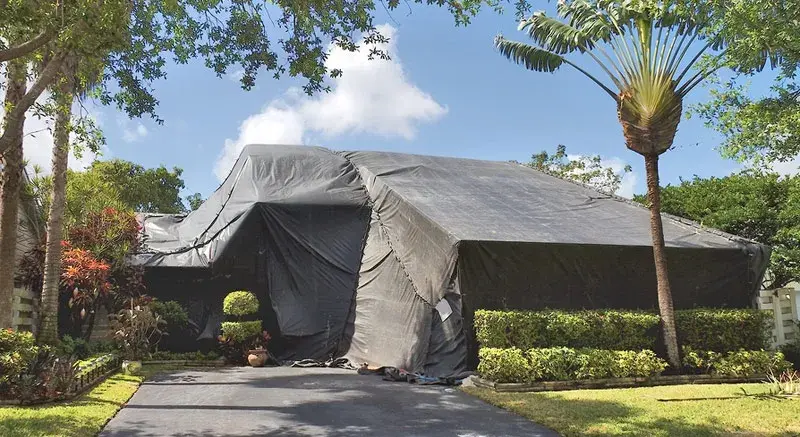
If you’re seeing tiny “sand-like” pellets near baseboards, window sills, or exposed wood, your home might be dealing with drywood termites—especially in older Fullerton neighborhoods where attic framing, fascia boards, and trim are easy targets. The tricky part isn’t just confirming termites. It’s choosing the right treatment the first time so you don’t end up repeating the problem six months later.
This guide breaks down drywood termite treatment in Fullerton in plain English: when spot treatment makes sense, when fumigation is the smarter call, and what a real inspection should include.
If you want a professional opinion fast, you can schedule a free inspection or call (888) 683-3592.
Quick-Answer
Do I automatically need a tent?
Not always. If activity is limited and we can confirm the exact areas, spot treatment can work. When activity is widespread or hidden in multiple areas, fumigation is often more reliable.
What’s the biggest advantage of fumigation?
It treats the entire structure at once, including hidden galleries in walls and attic framing. UC IPM notes monitored fumigation has the highest success rate when done correctly.
Is fumigation “dangerous”?
Fumigation uses restricted-use materials and must follow strict label and clearance requirements. EPA has issued additional safety measures to reduce re-entry risks—another reason to use licensed professionals.
Will spot treatment prevent termites from coming back?
Spot treatment can eliminate the current infestation area, but it doesn’t “protect” the entire house from future reinfestation—prevention steps matter after any treatment.
What should I do today (before anything else)?
Get a real inspection that confirms: type of termite, extent, and where they’re active—then pick the treatment based on evidence, not guesses.
Why You Can Trust Termike (credentials + methodology)
State licensed with the California Structural Pest Control Board (License PR8832)
Licensed Branch-2 & Branch-3 operators + NPMA membership
25+ years serving Orange County / Greater LA communities
Our inspections can include FLIR thermal scans, UV tracking dust, and entry-point sealing audits
For service options, start here: Our Services
Step 1: Confirm it’s drywood termites (not “just ants”)
Drywood termites live inside the wood they eat. They don’t need soil contact (unlike subterranean termites), which is why they often show up in:
Attic framing and roof sheathing
Fascia boards and eaves
Window/door frames and trim
Exposed beams, baseboards, and cabinetry
Common signs include pellet-like droppings (frass), tiny kick-out holes, and blistered or hollow-sounding wood. The California Structural Pest Control Board has a helpful overview of signs and termite types if you want a reliable baseline.
If you want the Termike breakdown (with photos and plain-language explanations), see: Drywood Termites and About Termites.
Step 2: Understand your two real options
Most homeowners in Fullerton end up choosing between:
Option A) Spot treatment (local treatment)
This targets confirmed termite activity in specific areas—think: a window frame, a fascia board section, or an attic corner where evidence is visible and reachable.
Spot treatment methods can include:
Precision injection into galleries (foam/dust/liquid depending on the situation)
Localized heat tools or other localized techniques (in some situations)
Option B) Whole-structure fumigation
This treats the entire home under a sealed tent using a structural fumigant. EPA explains sulfuryl fluoride is used to control termites and other structural pests and is regulated as a restricted-use pesticide. California DPR also lists sulfuryl fluoride as an active ingredient registered in California for fumigation.
UC IPM notes fumigation can treat all infestations simultaneously and highlights monitored fumigation as the highest-success approach when done correctly.
If you want a deeper comparison, read: Fumigation vs Local Treatment: Which Termite Option Do I Need?
When spot treatment makes sense (and when it doesn’t)
Spot treatment is usually a good fit when all of the following are true:
The infestation appears limited (one zone or a small number of connected areas)
We can confirm activity and access the galleries
There’s no evidence of multiple-room spread (attic + walls + trim in different zones)
You want a no-tent route (where appropriate) and understand the tradeoffs
It’s not the best plan when:
Activity shows up in multiple areas (e.g., frass in more than one room + attic evidence)
Access is limited (hidden galleries behind finishes where confirmation is weak)
Prior local treatments didn’t resolve the issue
You’re seeing structural impact across different wood members
One important reality: even when fumigation is thorough, UC Riverside researchers note a home can be reinfested later because fumigation doesn’t “future-proof” the structure—prevention still matters.
If your priority is maximum certainty in one pass, fumigation often wins—especially when the activity is widespread or hard to map fully.
When fumigation is the smarter call in Fullerton
Fumigation is commonly recommended when:
Evidence points to multiple colonies or multiple zones (attic + walls + trim)
You can’t confidently locate every active area for targeted treatment
The home has complex rooflines/attic layout where hidden galleries are likely
You want a single “whole-home reset” approach
This isn’t about pushing tenting. It’s about matching the method to the biology.
If fumigation is on the table, it’s also worth knowing this: EPA has added safety measures over time to reduce the risk of serious injury from re-entering homes after fumigation, reinforcing why compliance and proper clearance matter.
If you’re exploring this route, start here: Fumigation
What a proper drywood termite inspection should include (our process)
A good inspection should answer three questions:
What type of termite is it?
How far does it spread (scope)?
What treatment matches that scope?
Here’s the inspection workflow we aim for (especially when choosing between spot treatment and fumigation):
Evidence mapping (frass locations, kick-out holes, damaged wood patterns)
Thermal + visual confirmation (FLIR where appropriate)
Activity tracing with tools like UV tracking dust (when needed)
Entry-point + condition audit (wood exposure, attic/eave vulnerabilities, sealing opportunities)
Clear plan: spot treatment vs fumigation, with “why,” not just “what”
Ready to get that clarity? Schedule a free inspection or call (888) 683-3592.
The “Fullerton factor”: where we commonly find activity
In Fullerton homes, drywood activity often shows up around:
Eaves and fascia boards (sun + exposure + wood edges)
Attic framing (quiet, undisturbed, easy to miss)
Older trim and window frames
Additions/remodel transitions (different wood, small gaps, old sealant)
That’s why drywood termite treatment in Fullerton isn’t just “spray and go.” The inspection needs to connect the dots across attic + exterior + interior trim.
After treatment: prevent the next infestation
Treatment removes termites. Prevention reduces the odds you deal with it again.
Here are the prevention steps that matter most:
Seal wood-to-outside gaps (especially eaves/roof edges and penetrations)
Fix damaged wood early (termites love compromised wood fibers)
Reduce wood exposure where possible (paint/finish maintenance helps)
Schedule periodic inspections—especially after heavy swarm seasons
If termites have already impacted wood members, connect the dots like this:drywood termites → wood weakening/damage → structural repair with Damaged Wood Repair
For ongoing protection options, explore Termite Treatment and Eco-Friendly options.
Next step
If you want a clear recommendation (spot treatment vs fumigation) based on evidence—not guesswork—here are the two fastest routes:
Book online: Free Inspection Scheduling
Call now: (888) 683-3592
Want to confirm we cover your exact neighborhood? Check Areas We Serve.
And if you like to vet reviews first: Termike Pest Control on Yelp
FAQ'S
"Q: How do I know if I need fumigation or spot treatment?"
"A: It depends on scope. If activity is limited and we can confirm exact galleries, spot treatment may work. If activity is widespread (multiple areas, attic + walls, or unknown zones), fumigation is often the more reliable option."
"Q: Is fumigation safe for pets and kids?"
"A: Fumigation must follow strict label directions, clearance testing, and re-entry rules. EPA has approved additional safety measures over time to reduce risks from re-entering too soon—so the key is using properly licensed professionals who follow clearance requirements."
"Q: How long does drywood termite treatment take?"
"A: Spot treatment is often completed in a shorter visit (depending on access and scope). Fumigation is a multi-step process (prep, tenting, treatment, aeration, clearance) and typically takes longer overall."
"Q: Can drywood termites come back after treatment?"
"A: Yes—any home can be reinfested. Treatment eliminates current termites; prevention steps (sealing, repairs, inspections) reduce the chance of a repeat problem."
"Q: What should a termite inspection include?"
"A: A proper inspection should identify the termite type, map the scope, and recommend treatment based on evidence. Tools like thermal imaging, tracking dust, and entry-point audits can help confirm the extent when conditions require it."


Comments